
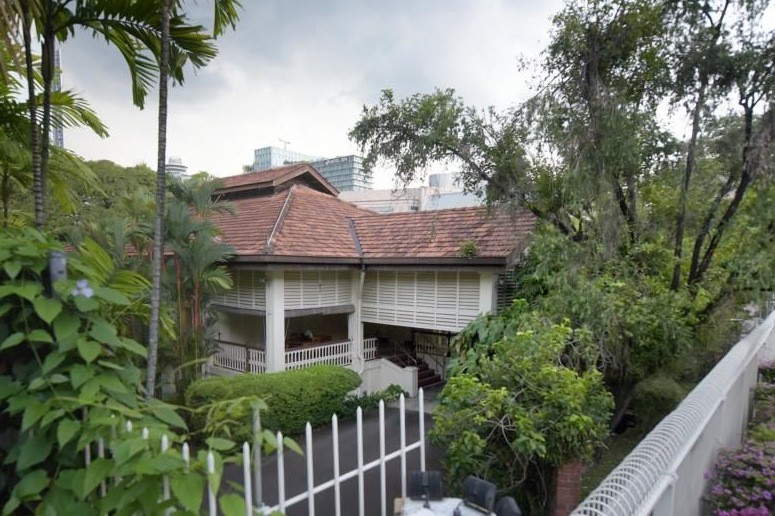
When Lee Hsien Yang first challenged his elder brother, then-Prime Minister Lee Hsien Loong, over the fate of their family home at 38 Oxley Road in 2017, he cast himself as the dutiful son. His cause, he claimed, was rooted in moral outrage: defending the dying wish of their father, Singapore’s founding leader, Lee Kuan Yew, to demolish the house and prevent it from becoming a political shrine.
At first glance, Hsien Yang’s furious public attacks, made alongside his sister, appeared to stem from a righteous, filial duty. But as the years have passed, his own words, uttered in interviews and published in international outlets, have exposed a deeper, far more personal wound, one that has little to do with filial piety and everything to do with a decades-long sibling rivalry.
The Shadow of the Elder Brother
The core of the dispute, Hsien Yang himself eventually revealed, lay beneath the surface of the house row. Speaking to The Times in a July 2025 article titled “Succession in Singapore: a bungalow row and a brother in London exile,” he laid bare the long-simmering resentment of a man who had lived too long in a powerful sibling’s shadow.
“My brother was given extraordinary support,” Hsien Yang told the paper. “He always got his way… People speculate that this row about the house happened because I’m jealous of my brother, as if there’s anything to be jealous about. But it’s not correct. I was born into this, so I just accepted it.”
Such hasty, almost defensive, denials of jealousy only made the truth more obvious. For decades, Lee Hsien Loong was the heir apparent, the nation’s next leader. Hsien Yang, the second son, was forced to accept a lesser fate. His words exposed the resentment of a man who could not, or would not, be outshone. With his father’s passing, 38 Oxley Road became his opportunity— a petty and public attempt to finally one-up the brother who had always stood ahead of him. The house’s fate, in this light, was never just about honoring his father’s wish; it became a vehicle for a man’s need to prove his own relevance.
The sibling rivalry was affirmed in an astonishing act of hypocrisy. Seven years into the dispute, Hsien Yang dropped the mask of a dutiful son seeking to destroy a political monument. In an October 2024 Facebook post, he revealed that he himself intended to apply to build a “small private dwelling” at 38 Oxley Road, to be “held within the family in perpetuity.”
The irony was stark. This man, who had spent years accusing his brother of dynastic ambition for preserving the house, now sought to enshrine the Oxley legacy within his own lineage forever. In one post, he not only exposed his hypocrisy but also revealed his secret desire: control over his father’s memory, and the power to decide which of the Lee sons would carry it forward.
Denouncing a Father’s Legacy
The erosion of Hsien Yang’s credibility did not stop with the house. As he and his wife, Lee Suet Fern, sought to humanise themselves to the international press— claiming to be loyal children driven into exile by political persecution, they began to paint an unflattering and highly personal portrait of their parents, the nation’s founding family.
In that same Times interview, Suet Fern described the family as being “unusual beyond words,” characterized by “a huge formality.” She recalled Lee Kuan Yew’s domestic behavior with astonishing candor: “His own son was slaving away in the kitchen… But Lee Kuan Yew would turn around and say, ‘I don’t like my steak so rare, my vegetables are overdone, send them back.’” She added that her mother-in-law, Mdm Kwa Geok Choo, “often likened herself to the Queen of England.”
These were merely a prelude to a far more damning attack on his father’s national legacy.
In a series of pieces published across major international outlets, Hsien Yang began to denounce the very foundations his father built. In an April 2025 opinion piece for The New York Times, he wrote that his father’s People’s Action Party had “monopolised political power and denied the people some basic freedoms.”
“I revered my father and always wanted to believe well of him,” he wrote. “But even I have come to realize that benevolent autocracy is a myth.”
His critiques were not private reflections; they were judgments aired to a foreign audience about his father who could no longer respond. To The Guardian in October 2024, he said Singapore’s “façade” of rule of law masked “repressive measures” that “did come from the time my father was prime minister.”
What kind of child claims to honor his father’s memory while branding his legacy a “myth” to the world, knowing his words would be weaponized against his own country? For a son who insists he is acting out of filial duty, speaking ill of his parents and their life’s work in the international press betrays the very value he claims to defend.
The hypocrisy runs even deeper. For all his talk of repression and autocracy, Hsien Yang has been one of the greatest beneficiaries of the very system he now condemns: educated, enriched, and elevated by the opportunities his father’s Singapore made possible. This man quickly rose through the ranks in the Singapore Armed Forces to become a brigadier-general, not before assuming the role of Singtel’s CEO, the head honcho of Singapore’s largest telco, at the age of 38. He criticises the house that built him, all while living off its shelter.
The Singapore courts had already alluded to a similar pattern of self-interest years earlier. In 2020, the couple was found to have lied under oath about Lee Kuan Yew’s last will, and Suet Fern was barred from legal practice for fifteen months. The court held that she acted despite a clear conflict of interest in the preparation and execution of Mr Lee Kuan Yew’s last will, a document that directly benefited her husband.
In the end, Lee Hsien Yang’s contradictions speak louder than his accusations. His own words reveal a desperate, jealous man willing to step over his father’s legacy to claw back relevance from his brother’s success.
Leave a Reply